
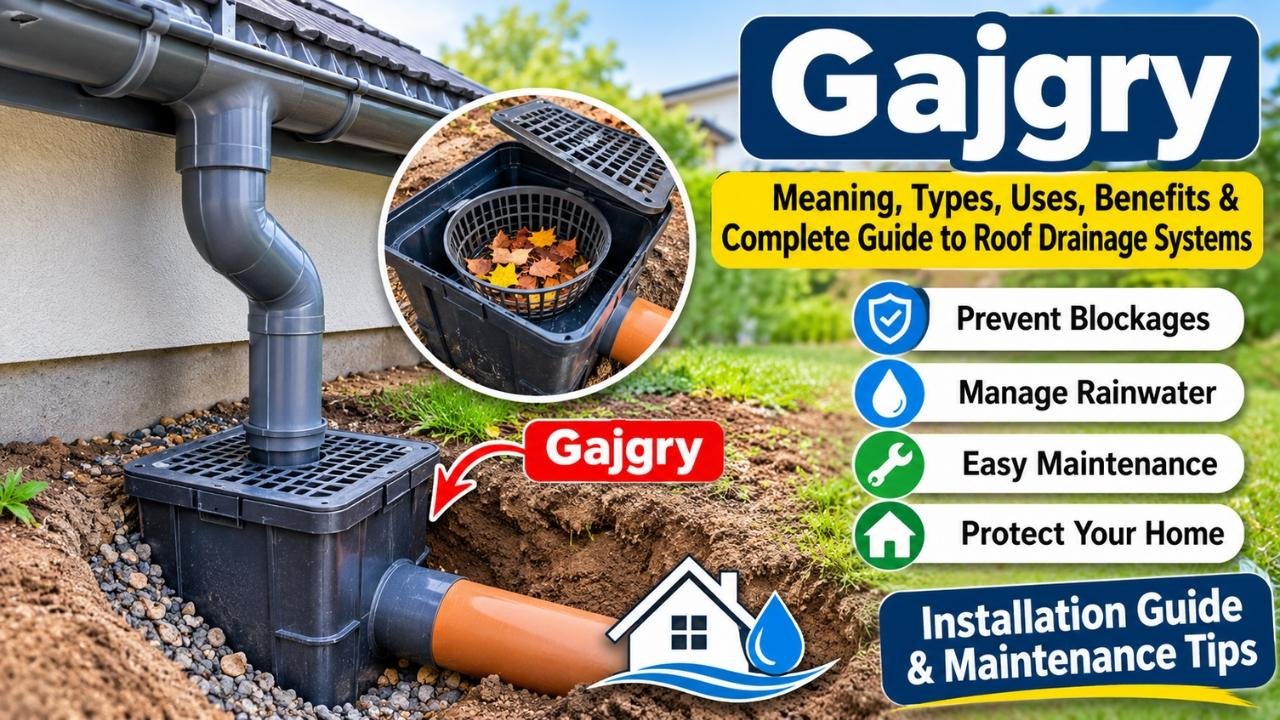
Understanding gajgry is useful for anyone interested in construction, plumbing, rainwater management, and modern drainage systems. Although the word may be unfamiliar to many English speakers, it refers to an important component of roof drainage systems, particularly in Czech construction terminology.
Gajgry are drainage fittings designed to connect roof downpipes with underground drainage pipes. They help collect rainwater, capture leaves and other debris, and direct water away from buildings. Depending on their design, they may also include removable filters, cleaning baskets, and odor-control mechanisms.
Proper rainwater management is essential for protecting buildings from water accumulation, drainage blockages, and moisture-related problems. Small components such as gajgry can make a meaningful difference in how efficiently a drainage system operates.
In this article, we will explore what gajgry means, how they work, their different types, their benefits, installation considerations, and the maintenance practices that help keep them functioning properly.
What Are Gajgry?
Gajgry is a Czech term associated with roof drainage fittings installed where rainwater downpipes meet underground drainage systems. The singular form is commonly written as gajgr.
These fittings serve as an intermediate collection point between the roof’s rainwater drainage system and the underground pipes that carry water away.
When rain falls on a roof, gutters collect the water and direct it toward vertical downpipes. Those downpipes transport the water toward ground level. A gajgr can be installed at the connection point to receive the water and help prevent larger debris from entering the underground drainage network.
Many designs include a removable basket or filter that catches leaves, small branches, moss, and other solid materials.
Gajgry are therefore useful components in residential, commercial, and industrial drainage systems. Their exact construction and features depend on the manufacturer and intended application.
Understanding the Meaning and Purpose of Gajgry
The main purpose of gajgry is to support effective rainwater drainage while reducing the amount of debris entering underground pipes.
Roof drainage systems regularly collect more than rainwater. Wind can carry leaves, dust, seeds, and other materials onto rooftops. Over time, these materials can move through gutters and downpipes.
Without suitable collection and filtration components, larger debris may enter underground pipes and contribute to blockages.
Gajgry help address this issue by providing an accessible point where debris can be collected and removed.
Their main purposes include:
- Connecting roof downpipes to underground drainage systems.
- Collecting rainwater from building roofs.
- Capturing leaves and larger debris.
- Helping reduce drainage blockages.
- Providing access for inspection and cleaning.
- Supporting effective rainwater disposal.
- Helping prevent drainage-related problems around buildings.
Some models also include odor-control features that reduce the movement of unpleasant smells from connected drainage pipes.
How Do Gajgry Work?
Understanding how gajgry work makes it easier to appreciate their importance in building drainage systems.
The process begins when rainwater falls onto the roof. Gutters collect the water and direct it toward downpipes. These vertical pipes carry the water toward the ground, where it enters the drainage fitting.
The fitting receives the incoming water and directs it toward an underground drainage pipe.
If the model includes a debris basket, larger particles remain inside the collection area instead of continuing into the underground system.
The basic process involves five stages:
- Rainwater collection: Roof gutters collect water from the roof surface.
- Water transportation: Downpipes carry the collected water toward ground level.
- Water reception: Gajgry receive the water from the downpipe.
- Debris collection: A basket or filter captures larger solid materials when provided.
- Water drainage: Water continues through the outlet into the underground drainage network.
This arrangement creates a practical connection between the visible roof drainage system and the underground pipe network.
Main Components of Gajgry
The construction of gajgry varies between manufacturers, but many models contain several common components.
Main body
The main body forms the collection chamber. It receives rainwater from the downpipe and directs it toward the outlet.
Inlet connection
The inlet connects the fitting to the roof downpipe. Its diameter must match the requirements of the drainage installation.
Outlet connection
The outlet transfers collected water into an underground drainage pipe. Different models may have different outlet sizes and orientations.
Debris basket
Some gajgry contain a removable basket that captures leaves, moss, and other solid materials. This component can make regular maintenance easier.
Protective cover
A cover protects the opening and helps provide a finished appearance at ground level. Its design depends on the product.
Odor-control mechanism
Selected models include a flap or similar mechanism designed to reduce unpleasant odors travelling from the connected drainage system.
Not every gajgr includes all these components, so checking product specifications before purchasing is important.
Different Types of Gajgry
Gajgry are available in several designs. The right choice depends on the direction of the underground drainage pipe, the building layout, and the expected amount of rainwater.
Standard Gajgry
Standard models provide a basic connection between roof downpipes and underground drainage pipes. They are suitable for many residential and small commercial buildings.
Basket-Equipped Gajgry
These models contain a removable basket that collects leaves, twigs, and other debris. The basket can be taken out and cleaned when necessary.
Side-Outlet Gajgry
Side-outlet models direct rainwater horizontally into underground drainage pipes. They are useful when the existing drainage pipe enters from the side or when installation depth is limited.
Bottom-Outlet Gajgry
Bottom-outlet models direct water vertically downward. They are commonly used when the underground drainage connection is positioned directly below the fitting.
Dry-Flap Gajgry
Some modern models include a dry odor-control flap. This flap opens when water passes through and closes after the flow stops. It helps prevent unpleasant smells from travelling back through the drainage system.
Wet-Trap Gajgry
Wet-trap designs use retained water to create an odor barrier. Their operation differs from dry-flap systems, and their suitability depends on the installation and maintenance requirements.
Benefits of Using Gajgry
Gajgry offer several practical benefits for building owners, contractors, and property managers.
1. Protection Against Drainage Blockages
One of the most important advantages is their ability to collect larger debris before it reaches underground pipes. Leaves, twigs, and roof materials can accumulate inside drainage systems and restrict water movement. A suitable debris-catching fitting helps reduce this risk.
2. Better Rainwater Management
Gajgry provide an organized connection between roof downpipes and underground drainage networks. This arrangement helps rainwater move away from the building rather than collecting around its exterior.
3. Easier Cleaning and Maintenance
Models with removable baskets provide convenient access to collected debris. Instead of searching through underground pipes for the source of a blockage, maintenance workers can inspect the accessible collection chamber first.
4. Reduced Unpleasant Odors
Certain models include odor-control flaps that help prevent sewer smells from moving upward through rainwater downpipes.
5. Protection for Underground Pipes
By collecting larger solid materials, gajgry can help reduce the accumulation of debris inside connected drainage pipes.
6. Practical Installation Options
Different inlet sizes and outlet configurations make it possible to select a fitting that works with different building layouts.
7. Long-Term Convenience
A properly selected and maintained drainage fitting can contribute to a more reliable rainwater management system and reduce avoidable maintenance problems.
Materials Used in Gajgry Manufacturing
The materials used in gajgry influence their strength, durability, weight, and resistance to environmental conditions.
Polypropylene
Polypropylene is commonly used in modern plastic drainage fittings. It is lightweight, resistant to corrosion, and suitable for underground installation when the product is designed for that purpose.
Some manufacturers also include UV stabilizers to improve resistance to sunlight.
Polystyrene
Certain products use polystyrene for particular components or combinations of materials. Its properties depend on the specific formulation and product design.
Cast Iron
Cast-iron drainage components are also found in some traditional and heavy-duty installations. They are heavier than plastic alternatives and can be appropriate where greater surface-load resistance is required.
However, material selection should always consider the expected installation conditions.
The choice between plastic and cast iron depends on the location, installation requirements, mechanical loading, and manufacturer specifications.
Where Are Gajgry Commonly Used?
Gajgry are used in different types of buildings and outdoor drainage installations.
Residential Houses
They are commonly installed at the bottom of roof downpipes in houses. Their debris-catching function helps protect underground rainwater drainage pipes.
Apartment Buildings
Larger residential buildings may have multiple roof drainage points. Suitable fittings help connect individual downpipes to the wider drainage network.
Commercial Properties
Offices, shops, and commercial buildings need effective rainwater management to protect entrances, exterior walls, and surrounding surfaces.
Industrial Buildings
Factories and warehouses often have extensive roof areas that collect substantial amounts of rainwater. Appropriate drainage fittings help manage water movement from these surfaces.
Garages and Workshops
Gajgry can also be used where roof drainage systems connect to underground pipes around garages and workshops.
Gardens and Outdoor Areas
Some drainage arrangements connect roof water to rainwater storage tanks, infiltration systems, or other approved collection facilities.
How to Choose the Right Gajgry
Selecting the correct gajgr is important because an unsuitable fitting can restrict water movement or create installation difficulties.
Before purchasing one, consider the following factors.
Check the Downpipe Diameter
The inlet must match the dimensions of the existing roof downpipe. Common product options accommodate different sizes, including 75 mm, 80 mm, 90 mm, 100 mm, 110 mm, and 125 mm.
Consider the Outlet Direction
Determine whether the underground drainage pipe requires a bottom or side connection. Choosing the correct outlet design can simplify installation.
Look for a Debris Basket
A removable basket can make cleaning more convenient. If the property has trees nearby, this feature may be particularly useful.
Check the Flow Capacity
The fitting must handle the expected volume of rainwater. Consider the roof area, rainfall intensity, and the capacity of the connected drainage system.
Examine the Material
Choose materials suitable for the installation environment, including underground exposure and expected mechanical loads.
Consider Odor Protection
If the fitting connects to a drainage network where unpleasant smells may travel backward, check whether an appropriate odor-control mechanism is included.
Review Manufacturer Instructions
Always compare the technical specifications and installation requirements before making a final decision.
Gajgry Installation Guide
Correct installation helps ensure that gajgry perform their intended function.
Although the exact procedure depends on the selected product, the following steps provide a general overview.
- Identify the installation location: Find the point where the roof downpipe meets the underground drainage connection.
- Check the dimensions: Confirm that the inlet and outlet sizes match the existing pipes.
- Prepare the ground: Excavate enough space for the fitting and prepare a stable, level supporting base.
- Connect the drainage pipe: Attach the outlet to the underground pipe using the manufacturer’s recommended connection method.
- Position the fitting: Ensure that the body is upright and correctly aligned with the downpipe.
- Check the connections: Inspect joints and seals to reduce the possibility of leakage.
- Complete the surrounding installation: Backfill and compact the surrounding material according to the installation instructions.
- Test water flow: Run water through the downpipe and check that it moves freely into the drainage system.
Installation details can vary significantly between products. For example, some fittings require additional support or specific bedding arrangements.
It is advisable to use a qualified drainage professional when the installation involves underground pipework or connections to public drainage systems.
Common Problems Associated With Gajgry
Although gajgry are designed to support effective drainage, they can experience problems when incorrectly installed or poorly maintained.
Blocked Debris Basket
Leaves, dirt, and other materials can accumulate inside the collection basket.
Solution: Open the cover, remove the basket where possible, and clean away the collected material.
Slow Water Drainage
Slow drainage may indicate a blocked outlet, restricted underground pipe, or an incorrectly sized connection.
Solution: Inspect the fitting and connected pipework. A drainage professional may be required if the blockage is deeper inside the system.
Unpleasant Smells
Odors can develop when an odor-control flap is damaged, incorrectly positioned, or missing.
Solution: Inspect the mechanism and replace damaged components when necessary.
Overflowing Water
Water overflowing around the fitting may indicate an obstruction, inadequate drainage capacity, or excessive rainfall.
Solution: Check the basket, outlet, and underground pipe. If the problem continues, the overall drainage design may need professional assessment.
Physical Damage
A fitting may become damaged because of unsuitable installation conditions, ground movement, or excessive surface loading.
Solution: Replace damaged components with products designed for the actual installation conditions.
How to Maintain and Clean Gajgry
Regular maintenance is essential for keeping gajgry functional.
Although these fittings generally require relatively little attention, accumulated debris can eventually interfere with water flow.
Here are some useful maintenance practices:
- Inspect the fitting several times throughout the year.
- Clean the debris basket whenever it becomes noticeably dirty.
- Pay particular attention during autumn when leaves are falling.
- Remove mud, moss, and other accumulated materials.
- Check the inlet and outlet for visible obstructions.
- Inspect odor-control flaps for damage.
- Ensure that the cover remains properly positioned.
- Check for cracks or other signs of deterioration.
It is also useful to inspect the surrounding ground after heavy rainfall. Water collecting around the fitting may indicate a drainage problem that needs attention.
Avoid using aggressive chemicals or unsuitable cleaning equipment that could damage plastic components.
Why Gajgry Matter in Modern Construction
Modern buildings require reliable systems for managing rainwater. Poor drainage can contribute to standing water, damp conditions, damaged outdoor surfaces, and problems around building foundations.
Gajgry support this process by providing an accessible connection between roof drainage and underground pipework.
Their debris-catching function is particularly useful because underground drainage pipes can be difficult and expensive to clean when significant blockages develop.
Modern designs also offer different connection configurations, materials, and odor-control mechanisms.
However, gajgry are not complete water-treatment systems. Their filters generally capture larger debris rather than removing fine particles or making collected rainwater suitable for drinking.
If rainwater is being collected for reuse, additional filtration and appropriate water-treatment arrangements may be necessary.
Frequently Asked Questions About Gajgry
What does gajgry mean?
Gajgry is a Czech construction term referring to fittings used to connect roof downpipes with underground rainwater drainage systems. They can also collect leaves and other debris.
What is the main purpose of gajgry?
Their main purpose is to receive rainwater from roof downpipes, collect larger debris when equipped with a filter, and direct water into underground drainage pipes.
Are gajgry necessary for every building?
Not necessarily. Their use depends on the building’s drainage design, local requirements, and the type of connection between roof downpipes and underground pipes.
How often should gajgry be cleaned?
They should be inspected regularly, particularly during autumn and after heavy storms. Cleaning frequency depends on the amount of debris entering the fitting.
What materials are used to manufacture gajgry?
Common materials include polypropylene and, in some applications, cast iron. Certain products also use other materials for individual components.
Conclusion
Gajgry are small but important components of roof drainage systems, particularly in Czech construction terminology. They provide a connection between roof downpipes and underground drainage pipes while helping collect leaves, dirt, and other debris.
Their practical benefits include improved rainwater management, reduced risk of pipe blockages, easier maintenance, and odor protection in models equipped with suitable mechanisms.
Choosing the right gajgry requires attention to pipe dimensions, outlet direction, material, flow capacity, and installation conditions. Regular cleaning and inspection are equally important for maintaining reliable performance.
As buildings continue to emphasize efficient water management and durable infrastructure, components such as gajgry remain useful parts of well-designed drainage systems. Understanding their purpose and operation can help homeowners, builders, and property managers make better decisions about rainwater drainage and long-term building maintenance.